Part 3: Building Secure Code with GitLab

Unlock the potential of secure code with GitLab's integrated DevSecOps tools for a more robust and efficient software development lifecycle

In one minute

  • Shift security left by running meaningful checks inside the merge request, not only in production.

  • Static analysis, dependency insight, and container scanning belong on the default path to release.

  • Compliance evidence should be generated as code moves, not assembled from screenshots after the fact.

  • Shared metrics for security and engineering beat blame dashboards when you need sustainable culture.

Article9 min readDevSecOps, Security, Compliance

Editorial hero for DevSecOps with GitLab: secure pipelines and compliance

SeriesDevSecOps with GitLab

Opening summary

Regulated teams cannot treat security as a gate at the end of a sprint. When findings surface late, rework is expensive, releases slip, and auditors see a story that does not match how software actually ships.

GitLab concentrates planning, merge requests, pipelines, and security signals in one place so evidence travels with the commit. This article is the third part of our DevSecOps trilogy: how to build secure code without turning delivery into chaos.

Core insights

Why secure pipelines matter for fintech

  • Customers and regulators expect controls you can explain, not heroics the week before an audit.
  • When security lives in a separate tool chain, ownership blurs and fixes arrive too late to be cheap.
  • GitLab’s model is simple: make the merge request the contract for what ships, with scans and policy results visible to the same reviewers who merge.

Security belongs inside the merge request, not at the door

Core points

  • Late-stage gates create a false sense of safety: teams pass a checkpoint, then change behaviour until the next audit.
  • Findings are cheapest when authors still remember why the code changed, and hardest when another squad inherits a release branch.
  • Policy as code in the pipeline makes “allowed to merge” a shared, inspectable decision instead of a hallway conversation.

Skunk tip

  • Treat failing security jobs like failing unit tests: fix or waive with a named owner, never silent ignore.
  • Keep scan configuration in version control next to the application so history matches what auditors review.

Static and dynamic analysis as default quality gates

Core points

  • SAST catches classes of defects humans miss at scale; DAST validates what actually runs when traffic and auth behave like production.
  • Running them only on main means you are measuring how fast you can rework, not how fast you can learn.
  • Tune rules for signal over noise: a noisy gate trains teams to click through, which is worse than no gate.

Dependency and container scanning before promotion

Core points

  • Most modern breaches exploit known vulnerabilities in dependencies or base images, not novel zero-days in your feature code.
  • Scanning registries and lockfiles in CI gives product teams a ranked backlog instead of a surprise pen-test appendix.
  • Promotion rules should reference digest or provenance so “what ran in test” is what ships.

Skunk tip

  • Block merges on critical CVEs with a fix path; time-box exceptions with expiry dates in your tracker.

Compliance evidence that travels with the commit

Core points

  • Auditors care about traceability: who approved a change, which controls ran, and what artefacts prove it.
  • Exportable pipeline results and merge metadata beat screenshots because they scale with release frequency.
  • When evidence is automatic, security stops being the team that says “no” and becomes the team that proves “yes, with controls”.

Culture: shared metrics, not blame dashboards

Core points

  • Security metrics that only appear in an executive pack invite gaming; metrics next to lead time and change failure rate invite partnership.
  • Celebrate mean time to remediate, not just count of findings, so teams optimise learning speed.
  • Rotate reviewers across squads so security literacy spreads without centralising every decision.
Truth bomb

If security only shows up when something breaks, you are not doing DevSecOps, you are doing damage control.
GitLab-first habits for secure delivery

Operating checklist

  • Define merge criteria that include security jobs, coverage floors, and dependency policy in plain language.
  • Keep secrets out of logs and store them in the platform vault or cloud secret manager with least privilege.
  • Version pipeline definitions and scan profiles so rollbacks restore controls as well as code.
  • Run tabletop exercises on “failed scan on Friday” until the playbook is boring.

Close

If you are modernising delivery on GitLab, start with Part 1 for foundations and Part 2 for flow. When you want hands-on help wiring pipelines, policy, and evidence for your regulators, we are happy to start a conversation.

Contact

Frequently asked questions

GitLab provides tools like SAST, DAST, dependency scanning, and container scanning. These tools are integrated into the CI/CD pipeline to automate security testing.

GitLab integrates security into the development pipeline, allowing security and development teams to work together on identifying and resolving vulnerabilities in real time.

Integrating security early helps catch vulnerabilities before they grow into larger issues. It also reduces the time and cost of fixing these problems later in the process.

Automation ensures security checks are applied consistently and without human intervention, minimizing the risk of human error and missed vulnerabilities.

GitLab supports DevSecOps by embedding security into every stage of development. This helps teams ensure security is a constant focus rather than an afterthought.

Related insights

Editorial hero for DevSecOps foundations with GitLab, planning and toolchain

Part 1: Laying the Foundation for DevSecOps with GitLab

Explore the transformative power of GitLab's DevSecOps platform: a seamless integration of development, security, and operations that enhances software deve

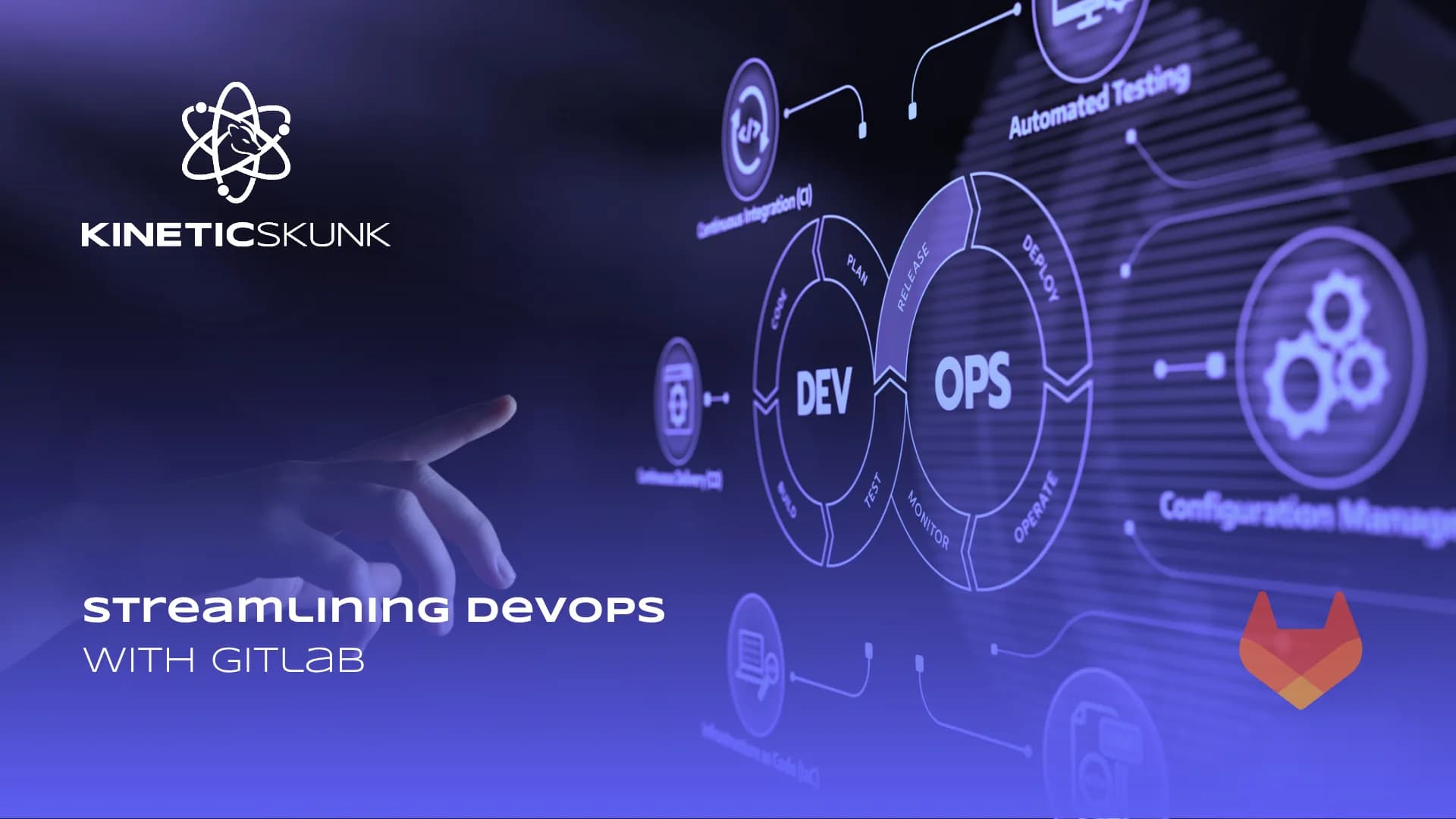
Editorial hero for streamlined DevOps with GitLab, pipelines and flow

Part 2: Effortlessly Streamline DevOps with GitLab

Simplify & improve your development cycle with GitLab's user-friendly tools. Streamline your DevOps & get an integrated platform.