



Jenkins to GitLab Migration Success
Discover how a Jenkins to GitLab Migration Success enhanced our clients CI/CD processes for better efficiency and security

KineticSkunk designs, migrates and governs GitLab delivery paths that support platform and application change across AWS and Azure, from new platform builds through ongoing managed operations.

GitLab partner badges give named proof for vendor review. The stronger proof is how the delivery model connects migrations, CI/CD, runners, security checks, and release evidence to managed AWS and Azure platforms.
Channel partner status supports commercial and platform conversations when GitLab sits inside a wider cloud operating model.
Procurement, platform, and delivery stakeholders can tie GitLab adoption to a named partner programme, not unsupported tooling claims.

Professional Services Partner status supports implementation work on migrations, CI/CD design, runner strategy, and delivery governance.
Teams get GitLab delivery help tied to practical implementation work, not a generic tooling conversation.
GitLab is the delivery control layer when AWS and Azure platforms need change to stay reviewed, repeatable, and explainable.
Code, infrastructure, environments, and releases follow one governed path into managed platforms.
Security checks, approvals, runner boundaries, and exception handling stay close to the merge request.
Artifacts, deployments, approvals, and rollback signals remain visible for support and review.
Below is how each GitLab service lane strengthens that delivery path.
Expand each lane to see how GitLab delivery control supports managed AWS, Azure, and cloud platform operations.
GitLab CI/CD paths give cloud workloads a controlled route from source change to release.
We design the pipeline around environments, approvals, artifacts, deployment evidence, and rollback thinking before production pressure lands.

This is the delivery foundation for managed platforms where releases need to be predictable and explainable.
Jenkins, scripts, and disconnected delivery tools often hide ownership and release evidence.
We map projects, groups, secrets, runners, pipeline parity, and staged cutover so migration decisions stay controlled.

This is the migration path for teams that need fewer delivery tools and clearer operational ownership.
Managed platforms need release paths that show what was scanned, approved, excepted, and deployed.
We embed SAST, dependency scanning, container scanning, secret detection, approvals, and exception handling into the delivery workflow.

This is the control path for teams that need security evidence to stay connected to release work.
GitLab runners become platform infrastructure when they build, scan, package, and deploy production workloads.
We shape runner fleets around workload needs, security boundaries, queue expectations, cost control, and isolation.

This is the build-platform path for teams whose delivery reliability depends on runner architecture.
AI-assisted development only helps when teams can still explain quality, security, and review decisions.
We connect AI-assisted code quality patterns to review, testing, approval, and governance routines that keep humans accountable.

This is the governance path for teams adopting AI assistance inside delivery workflows.
GitLab matters when cloud change has to be reviewed, released, and explained.
These are the business outcomes it supports: governed delivery, managed operations, recoverable platforms, defensible access, observability, and validated resilience.
Platform assurance for CI/CD and release evidence
GitLab-led pipelines with the same governed outcome on Azure DevOps or AWS CodePipeline when that is your anchor.
Release control for production platforms
Use GitLab when AWS and Azure workloads need reviewed, repeatable delivery into managed platform operations.
Delivery evidence for recoverable systems
Connect release history, approvals, and rollback routines to systems that need recoverable proof.
Security checks close to change
Use GitLab controls to keep secrets, scans, approvals, and exception handling visible before release.
AI-assisted delivery with review control
Use AI-assisted development where review, testing, quality, and security expectations remain clear.
Pipeline signals in the same investigation model
Correlate GitLab pipeline and deployment signals with platform and application telemetry so operators investigate change and runtime together.
Validation signals tied to delivery confidence
Quality strategy, functional automation, API validation, and continuous testing wired into GitLab pipelines so quality is proven before merge.
Validation evidence before production pressure
Connect GitLab release paths to performance, reliability, and security validation so non-functional behaviour is proven before customers feel gaps.
GitLab delivery work starts with the current estate, then moves toward a governed operating model that can support AWS, Azure, and managed hosting platforms.
We review groups, projects, runners, variables, pipelines, approvals, scanners, and environment promotion before changing what teams already rely on.
Map repositories, groups, permissions, runners, secrets, CI templates, deployment targets, and current release evidence.
Known delivery surface
Separate what should stay, what should be standardised, and what needs stronger security or release governance.
Prioritised control plan
Align templates, runner tags, environments, artifacts, approvals, and rollback routines to managed cloud platform needs.
Repeatable delivery paths
Wire scanning, exception handling, approval policy, and deployment evidence into the normal merge and release flow.
Reviewable controls
Document operating routines so GitLab delivery supports AWS, Azure, and managed hosting operations after implementation.
Operable delivery model
We design GitLab delivery alongside the cloud platform so applications, infrastructure, scans, approvals, and release evidence are planned from day one.
Define group structure, project templates, branch strategy, runner model, environment promotion, and cloud deployment targets.
Clear delivery design
Create repeatable CI/CD templates for application, infrastructure, security, and release stages across AWS and Azure workloads.
Ready delivery foundation
Connect build, scan, package, deploy, and rollback routines to the managed AWS or Azure platform path.
Controlled promotion
Set approval rules, exception handling, ownership, and practical team guidance so controls are usable.
Sustainable adoption
Hand over release evidence, runner ownership, security checks, and support routines into the platform operating model.
Managed cloud delivery
Request the DevSecOps white paper
Governed pipelines, security checks, and release evidence
Cloud platforms need more than faster releases. Teams need delivery paths where security scanning, approvals, runner boundaries, and release evidence stay visible before production change. This white paper explains how GitLab supports DevSecOps operating models on managed AWS and Azure platforms, and how to tighten controls without slowing delivery.
These insights connect GitLab partner work to migration, CI/CD control, DevSecOps, custom runners, and AI-assisted delivery governance.
Discover how a Jenkins to GitLab Migration Success enhanced our clients CI/CD processes for better efficiency and security

A case study about the advantages of Gitlab with custom runners reflecting 70% faster deployment and scalable, secure CI/CD.

Learn how to establish DevSecOps with GitLab using clear ownership, merge controls, CI/CD standards, security testing, runners and evidence.
Design CI/CD pipelines for fast feedback without sacrificing reliability. See where bottlenecks live and how runners and reusable components fit.

Integrate SAST, DAST, dependency and container scanning into GitLab. Surface security findings at merge time with appropriate policy and evidence.
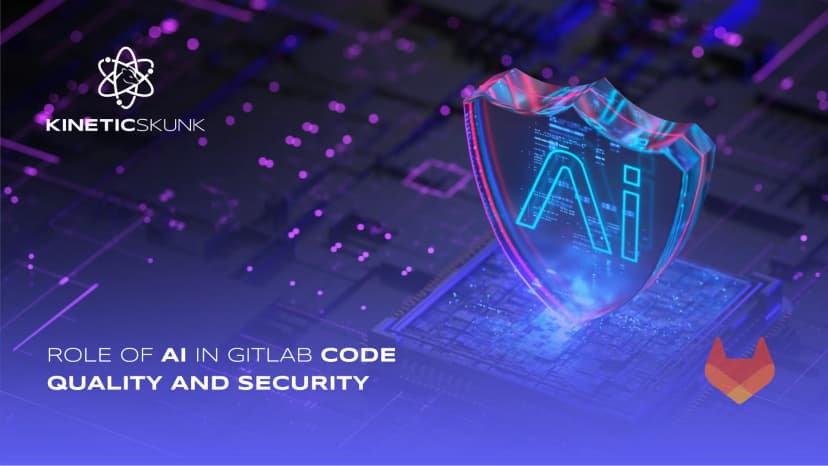
Learn where GitLab AI code review helps and where it cannot replace human review or security controls. A practical governance framework.
Answer 10 quick questions across security automation, CI/CD governance, vulnerability management, compliance, and developer enablement. You get an instant maturity band and the practical next steps to close the gaps that slow secure delivery down.
Free, no obligation, and your results are shown to you straight away.
YOUR DEVSECOPS MATURITY REPORT
Review your overall score, competency breakdown, and recommended next steps before requesting a follow-up.
29 / 40
Advanced
Your DevSecOps practice is well established. Security is integrated into many stages of delivery, and teams use automation and measurable controls to reduce risk. The next step is to improve consistency and connect outcomes to business value.
RESULTS BY COMPETENCY
This is a high-level self-check. A deeper, organisation-specific DevSecOps review is the right next step before you act on these results.
Example only. Your result will reflect your actual delivery practices across all six dimensions.
Book a short, tailored session and see CI/CD, security scanning, compliance, and governed delivery working on AWS and Azure. We focus on your delivery goals, not a generic slideshow.
A KineticSkunk engineer walks you through it, no obligation.

If AWS and Azure are becoming more important to your business, your delivery system needs to show how change is reviewed, tested, secured, approved, and released.