AWS Cloud Infrastructure Management: A Strategic Guide for Enterprise Scale in 2026
May 23, 2026
Secure CI/CD Implementation: A Strategic Blueprint for 2026
May 24, 2026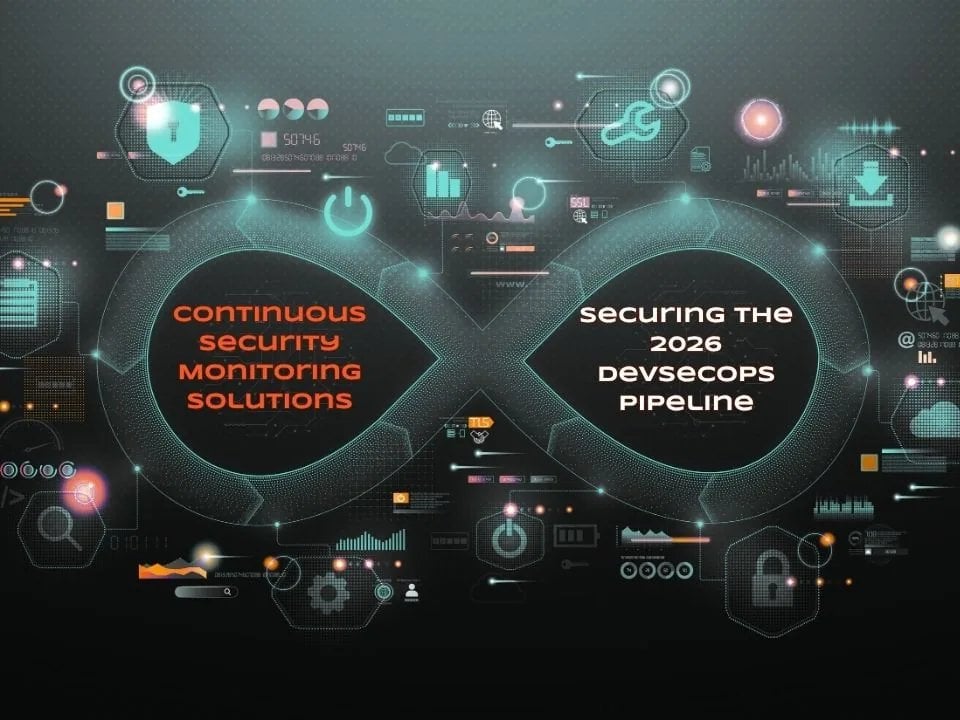
Did you know that 63% of security alerts currently go unaddressed because teams are buried under an average of 2,992 daily notifications? It’s a staggering reality that fuels alert fatigue and leaves your ephemeral cloud assets vulnerable. You likely feel the tension between the need for rapid deployment and the necessity of rigorous protection. Security shouldn’t be a bottleneck that slows down your developers; it should be the engine that empowers them to build with confidence.
We understand that true resilience requires moving beyond point-in-time audits toward a state of constant awareness. This article reveals how to integrate continuous security monitoring solutions into your workflow to transform static security into a dynamic, automated defense system. By the end of this guide, you’ll discover how to achieve real-time threat detection and automated compliance reporting. We’ll show you how to align your DevSecOps culture so that security becomes a seamless, invisible part of your software delivery lifecycle. Together, we can build a pipeline that is as secure as it is fast.
Key Takeaways
- Replace static, periodic audits with real-time observability to keep pace with modern, rapid-release software cycles.
- Discover how continuous security monitoring solutions provide a dynamic shield by integrating vulnerability scanning and IAM behaviour analytics directly into your workflow.
- Turn your CI/CD pipeline into an active security enforcement point by utilising powerful, integrated monitoring capabilities.
- Reduce operational burnout by learning to filter out infrastructure noise, allowing your specialists to focus on high-impact security signals.
- Build a resilient DevSecOps culture that balances technical rigor on AWS with a mission-driven approach to human potential.
Table of Contents
The Shift to Continuous Security: Why Static Audits Fail in 2026
The annual security audit is a relic of a slower era. While 36% of organizations have successfully adopted DevSecOps as of early 2026, many still struggle with the lag between development and defence. Waiting for a yearly penetration test is a high-stakes gamble your business can’t afford. We define continuous monitoring not as a checkbox exercise, but as a sophisticated observability discipline that provides real-time visibility into your posture. It’s the difference between looking at a photograph of a storm and watching a live radar feed.
Traditional methods fail because they ignore the reality of ephemeral cloud assets. When containers and serverless functions exist only for seconds, a manual audit will miss them entirely. This creates "Security Debt," a compounding burden of unaddressed vulnerabilities that grows every time you push code without automated oversight. Modern continuous security monitoring solutions bridge this gap by providing a persistent, automated watch over every asset, regardless of its lifespan. Continuous monitoring is the pulse of a DevSecOps ecosystem.
The Cost of Delayed Detection
Time is the primary currency of a cyberattack. In 2026, threat actors leverage automation to exploit misconfigurations within minutes of a new deployment. If a breach remains undetected for months, the financial impact isn’t just about immediate loss; it’s about the erosion of brand trust and the looming shadow of regulatory non-compliance. With the final rule for CMMC 2.0 effective as of late 2025, the stakes for maintaining real-time awareness have never been higher. A single unaddressed vulnerability can trigger a cascade of operational failures that take years to resolve.
Moving Toward ‘Security as Code’
The solution lies in shifting away from manual checklists toward automated policy enforcement. We view this transition as the evolution of security into programmable infrastructure. By integrating continuous security monitoring solutions directly into your CI/CD pipelines, you transform security from a reactive bottleneck into a proactive asset. This synergy between DevOps automation and observability allows your team to innovate at scale without sacrificing integrity. It’s about empowering your developers with the tools to build safely, ensuring that every line of code meets your principled standards before it ever reaches production.
Core Components of Effective Monitoring Solutions
Effective security isn’t a destination. It’s a persistent state of awareness. To move beyond mere compliance, your continuous security monitoring solutions must address the fluid nature of modern infrastructure. We look at security through the lens of observability, where every log, trace, and metric contributes to a holistic picture of health. This transition requires a move away from siloed tools toward a unified architecture that provides deep visibility into every corner of your ecosystem.
Aligning your strategy with NIST’s guidelines on Information Security Continuous Monitoring ensures your technical implementation remains grounded in proven risk management frameworks. A truly robust solution should encompass several critical pillars:
-
Real-time vulnerability scanning: Automated checks must cover both containers and serverless functions as they spin up and down.
-
IAM behavior analytics: Monitoring who accesses what is critical since over 74% of data breaches involve a human element.
-
AWS configuration drift detection: Automated alerts must trigger the moment your production environment deviates from its secure baseline.
-
Dark web monitoring: Proactive searches for leaked credentials or enterprise secrets help stop breaches before they start.
-
Unified observability: Security metrics must live alongside performance data to provide a single source of truth for your teams.
We believe that by integrating these components, you empower your people to focus on innovation rather than firefighting. If you’re looking to refine your cloud environment, our AWS Managed Services can help you establish these baselines with precision.
Automated Vulnerability Management
Scanning dependencies within your GitLab pipeline is no longer optional. In the 2026 threat environment, you must prioritise vulnerabilities based on real-world exploitability rather than simple severity scores. This means implementing a ‘verify’ step for critical CVEs to ensure that security fixes don’t break production. By automating this lifecycle, you remove the manual burden from your developers and ensure that only hardened code reaches your customers.
Behavioral Analytics and User Monitoring
Monitoring ‘what’ is happening in your network is only half the battle. You must also understand ‘who’ is performing those actions. AI plays a vital role here by detecting anomalous user behavior patterns that might signal a compromised account or an insider threat. Continuous credential validation ensures that access remains earned and justified. This approach protects your most valuable assets while nurturing a culture of accountability and trust across your digital landscape.
Integrating Security Monitoring into the DevSecOps Pipeline
The CI/CD pipeline is the heartbeat of your digital delivery. We shouldn’t treat it as a mere transport mechanism for code. Instead, it must serve as the primary enforcement point for your security posture. By embedding continuous security monitoring solutions directly into these automation tracks, you ensure that no vulnerability reaches production unnoticed. This integration creates a persistent feedback loop between your development teams and your security operations. It fosters a culture where security is a shared responsibility rather than a separate department’s burden.
Adopting modern security best practices requires more than just buying tools. It demands a fundamental shift in how we view the software lifecycle. We advocate for a framework where monitoring triggers automated remediations. If a build fails a security check, the system shouldn’t just alert a human; it should provide the developer with the exact context needed to fix the issue. This is the core of Kinetic Skunk’s DevSecOps integration , where we align technical rigor with operational efficiency.
Leveraging GitLab for Security Visibility
GitLab Ultimate provides a single pane of glass that simplifies complex security landscapes. By shifting monitoring left to the Merge Request level, we empower developers to see vulnerabilities before they ever merge code. This visibility is transformative. It allows teams to automate security dashboards for compliance audits, turning a weeks-long manual process into a real-time reporting asset. When security is visible at every step, it becomes a natural part of the creative process.
AWS Managed Security and Observability
AWS native tools like GuardDuty and Security Hub are the pillars of a modern monitoring strategy. We optimise these services to ensure you get clarity without the clutter of unnecessary costs. By integrating these tools with AWS Lambda, we can initiate auto-remediation for common misconfigurations. This proactive stance ensures your environment remains resilient, even when your team is focused on high-level innovation. We help you bridge the gap between cloud complexity and operational peace of mind. For a deeper look at hardening your automation workflows, our secure CI/CD implementation strategic blueprint provides a comprehensive framework for protecting your pipeline without sacrificing velocity.
Overcoming Alert Fatigue: Strategy Over Software
Data suggests that 76% of organisations cite alert fatigue as a primary concern for their security operations. With teams receiving an average of 2,992 alerts daily, the sheer volume of noise can be paralyzing. It’s no surprise that the annual attrition rate for SOC analysts has remained over 30% for three consecutive years. We believe that technology should empower people, not bury them. Implementing continuous security monitoring solutions without a clear operational strategy is simply a faster way to get overwhelmed.
True resilience comes from distinguishing meaningful signals from infrastructure noise. We must move beyond the "collect everything" mentality and embrace risk-based prioritization. This requires a deep understanding of your business context; ensuring that a minor configuration drift in a development environment doesn’t carry the same weight as a credential leak in production. Human expertise remains the essential ingredient in tuning these automated systems to reflect your unique risk profile.
Tuning the Signal-to-Noise Ratio
We solve the noise problem by integrating our Observability Solutions with your security stack. By correlating performance metrics with security events, you gain the context needed to identify true threats. Context-aware scanning eliminates false positives by verifying if a vulnerability is even reachable in your current architecture. We categorize alerts by business impact, ensuring your specialists spend their time on the 74% of breaches that involve a human element rather than chasing ghosts in the logs.
The Role of Managed Services in Alert Curation
Managing the security pulse of an enterprise is a relentless task. We act as a sophisticated filter for your organization, leveraging our AWS Managed Services to curate and validate incoming data. This partnership allows your internal teams to reclaim their focus, seeing only the critical issues that require their specific institutional knowledge. When you remove the burden of constant triage, you unlock the human potential within your DevSecOps culture. If you’re ready to transform your defensive posture into a strategic advantage, explore our DevSecOps Integration services today.
Optimising Your Security Posture with Kinetic Skunk
At Kinetic Skunk, we don’t just implement tools. We build partnerships rooted in a blend of high-level technical authority and a sincere commitment to social progress. Our identity as a Principled Expert means we understand the intricacies of high-stakes AWS and GitLab environments while remaining approachable mentors to your team. We believe that securing your digital infrastructure is about more than just risk mitigation; it’s about empowering your people and nurturing the local technical talent that drives long-term growth. By choosing us, you invest in a future where technical success and human potential grow in tandem.
Our approach to continuous security monitoring solutions focuses on tangible business outcomes. We help you reduce cloud waste by optimising the resources you already have, ensuring every dollar spent on security contributes to a leaner, more efficient pipeline. As an AWS Well-Architected Partner with confirmed compliance with ISO/IEC 27001:2022 and ISO/IEC 27017:2015 as of May 22, 2026, we provide the rigorous standards required for modern enterprise safety. This transformation begins with a clear, methodical roadmap:
-
Evaluate existing observability gaps and cloud resource utilisation.
-
Integrate native AWS and GitLab security features into a unified dashboard.
-
Automate policy enforcement through customised CI/CD pipeline triggers.
-
Refine the security pulse through persistent managed oversight and expert tuning.
Tailored AWS and GitLab Security Solutions
We don’t believe in "rip and replace" strategies that disrupt your momentum. Instead, we optimise your existing AWS and GitLab environments to create a custom security monitoring fabric that fits your specific needs. By applying a TestOps perspective, we treat security as a core quality assurance discipline, ensuring every deployment is both functional and hardened. This tailored approach allows you to scale rapidly without the friction of unintegrated point solutions, keeping your delivery lifecycle smooth and predictable. Organisations looking to strengthen their automation workflows can also benefit from following a proven secure CI/CD implementation framework that aligns with the latest NIST guidelines and the National Cybersecurity Strategy.
Building Long-Term Resilience
Long-term operational excellence is the natural result of persistent awareness. Our AWS Managed Services provide the stability your organisation needs to innovate without fear. We handle the complexities of cloud governance and threat detection, providing the comprehensive oversight required to protect your entire software delivery lifecycle. When security becomes a background strength rather than a constant crisis, your team is free to reach its full potential. We invite you to move beyond static defence and embrace a more dynamic, automated future. Secure your pipeline with Kinetic Skunk’s DevSecOps solutions .
Secure Your Future in the Cloud
The transition from reactive defence to proactive observability is the defining challenge of the 2026 DevSecOps landscape. We’ve explored how moving away from static audits toward real-time awareness eliminates the visibility gaps inherent in ephemeral infrastructure. By prioritising meaningful signals over infrastructure noise, your team can finally escape the exhausting cycle of alert fatigue. Implementing robust continuous security monitoring solutions ensures that your pipeline remains a source of innovation rather than a liability.
As an AWS Certified Partner with deep GitLab Professional Services expertise, we provide the technical rigour needed to protect your most valuable assets. Our specialised DevSecOps Integration Framework is designed to align your security posture with your broader business goals, nurturing talent while optimising performance. We’re ready to help you transform your defensive strategy into a sustainable competitive advantage. Empower your infrastructure with Kinetic Skunk’s Managed DevSecOps Services. Together, we can build a more secure and resilient digital future.
Frequently Asked Questions
What is the difference between continuous security monitoring and traditional logging?
Continuous security monitoring is an active, real-time observability discipline, whereas traditional logging is a passive, historical record of events. While logs provide the data for forensic audits after an incident, monitoring solutions analyse that data instantly to trigger automated defences. This proactive approach allows your team to identify and intercept threats as they emerge rather than discovering them weeks later in a log file.
Can continuous monitoring solutions integrate with GitLab CI/CD?
Yes, integration with GitLab CI/CD is essential for a modern DevSecOps workflow. By utilising GitLab Professional Services, we help you embed security scans and compliance checks directly into your merge requests. This ensures that your pipeline acts as a persistent enforcement point, preventing unhardened code from reaching your production environment while providing developers with immediate feedback.
How much does a continuous security monitoring solution cost in 2026?
Pricing for enterprise security monitoring varies significantly based on your infrastructure scale, the number of hosts, and the depth of features required. Organisations typically evaluate these costs based on data ingestion rates or per-user licensing models. We recommend reviewing current industry standard plans or consulting with a specialist to determine a budget that aligns with your specific risk profile and operational goals.
Does AWS provide native tools for continuous security monitoring?
AWS offers a robust suite of native tools, including Amazon GuardDuty, AWS Security Hub, and Amazon Inspector, which serve as foundational continuous security monitoring solutions. We optimize these services to ensure you gain maximum visibility across your cloud assets without the overhead of managing disconnected tools. These native capabilities provide the real-time detection needed to protect ephemeral cloud resources.
How do I reduce alert fatigue in my security monitoring system?
Reducing fatigue requires a shift from "collect everything" to risk-based prioritisation and context-aware scanning. By tuning your system to distinguish between infrastructure noise and meaningful signals, you ensure your specialists only see critical issues that require human expertise. This strategy protects your team from burnout and addresses the high attrition rates seen in the security industry over the last three years.
Is continuous security monitoring required for SOC2 or ISO 27001 compliance?
Yes, both SOC2 and ISO/IEC 27001:2022 emphasise the necessity of ongoing oversight for security controls. Continuous monitoring fulfils these requirements by providing real-time risk management and automated evidence collection. It transforms compliance into a steady state of operational excellence, ensuring you meet the latest standards without the stress of manual point-in-time audits.
What is the role of AI in modern security monitoring solutions?
AI is vital for detecting anomalous behaviour and complex threat patterns that traditional rule-based systems might miss. It automates repetitive triage tasks, which is critical since 97% of organisations are now using AI within their software development lifecycles. By leveraging AI, you can handle the massive volume of daily alerts and focus your human talent on high-level strategic defence.
How does Kinetic Skunk differ from a traditional MSSP?
We act as a mission-driven partner rather than a detached service provider focused only on ticket volume. Our "Principled Expert" approach combines technical authority in continuous security monitoring solutions with a commitment to nurturing your internal talent and driving social progress. We don’t just manage your security; we integrate it into your DevSecOps culture to empower your people and your business.